
A disturbing new trend is fast gaining ground across major open-air food markets, sparking urgent public health warnings and triggering widespread panic among consumers.
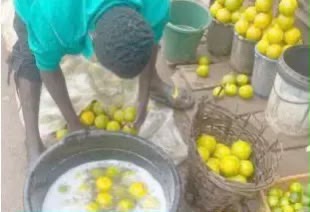
Economy&Lifestyle findings revealed that several local fruit vendors are systematically washing their produce with synthetic laundry detergents and liquid soaps.
The dangerous practice is aimed at stripping away natural grime, pesticide residues, and blemishes, giving the fruits an unnaturally vibrant, polished sheen that irresistibly attracts unsuspecting buyers, while drastically cutting down on spoilage losses.
From glossy, deep-green watermelons and bright yellow bananas to spotless apples, these chemically enhanced fruits have flooded urban centers.
However, medical experts warn that this aesthetic transformation comes at a catastrophic cost to human health, turning nutritious snacks into toxic hazards.
The glittering deception
For many traders operating in highly competitive, low-margin environments, the pressure to move inventory before it rots is immense.
Traditional washing with clean water often fails to remove stubborn mud or agricultural sprays, leaving produce looking dull.
A vendor at a local market, speaking on the condition of anonymity, candidly explained the financial motivation behind the chemical cleansing.
“Customers buy with their eyes first. If a watermelon looks dusty or faded, they will walk right past your stall to the next person. When we use a little detergent or liquid soap in the washing water, it cuts through the dirt instantly.
“It gives the fruits a beautiful, shiny coat that looks fresh from the farm. It helps us sell faster and reduces waste, which means more profit for us at the end of the day.”
The practice is not limited to watermelons. Bananas, mangoes, and citrus fruits are also being subjected to these chemical baths. Because synthetic detergents contain powerful surfactants, they strip away the fruit’s natural protective waxy layer, replacing it with an artificial gloss that mimics premium, imported produce.
On his part, Audu Musa, a fruit seller said: “The use of laundry detergent to wash fruit is to remove the dirt of mud from them and make them attractive to consumers.
“But I don’t use detergents. I take my fruits to the market and shade them the way they were brought from the farm. My customers prefer them that way.”
It was also discovered that when these fruits are washed with detergent, they are displayed like that without rinsing off the detergent water.
This method makes the fruits appear glossy and attractive.
While the vendors see an increase in patronage, food safety advocates and medical professionals are deeply alarmed.
Unlike specialized, food-grade vegetable washes, household detergents are formulated with complex chemical compounds, including linear alkylbenzene sulfonate, optical brighteners, artificial fragrances, and bleaching agents. These chemicals are designed for fabrics and surfaces, not human consumption.
Dr. Amara Nwosu, a gastroenterologist at a public teaching hospital, warned that the immediate and long-term health consequences of ingesting these chemical residues are severe.
“Ingesting even trace amounts of laundry detergent can cause acute gastrointestinal distress, including severe abdominal cramps, vomiting, and chronic diarrhea. What is more terrifying is the long-term impact.
“Consistent exposure to these industrial surfactants can severely erode the mucosal lining of the gut, disrupt the gut microbiome, and potentially lead to chronic kidney damage or liver toxicity over time.
“Fruits are supposed to heal the body, not poison it.”
The porous nature of certain fruit skins means that the chemicals do not just stay on the surface; they can seep directly into the flesh.
Consumers who fail to peel or thoroughly scrub their fruits are effectively consuming household cleaning agents with every bite.
Outrage and fear in the markets
As word of the practice spreads, consumer anxiety has reached an all-time high. Many shoppers report feeling betrayed by traders they have trusted for years.
Halima Yunusa, a trader, expressed her shock and deep concern over the lack of food safety ethics.
“It is completely heartbreaking to realize that the things we buy to keep our children healthy could actually make them sick.
“I used to think a shiny apple or a perfectly clean mango was a sign of quality. Now, I am terrified to buy anything.
“How can anyone prioritize a little extra profit over human life? The government needs to step in and police these markets immediately.”
As authorities scramble to contain the situation, food safety experts are advising consumers to be wary of fruits that appear excessively glossy, artificially bright, or carry a faint, unnatural floral scent. For now, the golden rule for shoppers is shifting away from aesthetic perfection toward a cautious preference for the natural, unpolished look of safe food.
—By Elizabeth Adegbesan