Nigeria’s recent electricity crisis may persist unless the Federal Government addresses mounting debts in the power sector, inadequate investment in gas production and weak infrastructure, industry stakeholders have warned.
They said the failure to establish a sustainable payment mechanism for gas suppliers was undermining electricity generation, while inadequate transmission infrastructure and poor commercial arrangements had continued to frustrate efforts to improve supply.
The stakeholders spoke at the sixth annual conference of the Power Correspondents Association of Nigeria in Abuja, where they identified financial and structural challenges threatening the country’s ambition to achieve a $1tn economy by 2030 through reliable and affordable electricity.
The concerns come amid renewed electricity supply disruptions across the country. On 5 November, the Nigerian Independent System Operator attributed a decline in national grid generation to inadequate gas supply to thermal power stations and reduced water inflows into hydroelectric reservoirs, resulting in shorter supply hours and increased load shedding.
However, the Nigerian National Petroleum Company Limited subsequently said its gas transportation network remained available, arguing that gas production, commercial supply arrangements and actual deliveries to power stations must be examined separately.
Speaking at the conference, the General Manager, Gas Commercial, Nigerian National Petroleum Development Company, Bashiru Adoke, said the gas-to-power crisis was not insurmountable but warned that resolving it would require sustained investment and a reliable payment structure.
He identified the inability of power market operators to pay for gas supplied to generating companies as one of the biggest obstacles to stable electricity generation.
According to him, electricity generation companies receive insufficient payments for the power they produce, making it difficult to settle gas invoices and sustain supply.
“There is no robust mechanism for payment of gas supply, because the proceeds from the market is not even enough to pay for gas supply. If you see the invoice monthly for energy generated, it is about 40 per cent and the gas takes about 60-75 per cent of production cost.
“The money is not even enough. That’s why you see in today, the market owes us over N630bn for power generated and consumed by Nigerians. We should try to establish a robust mechanism for payment of gas or else we would continue to have problems. The government intervention every three or four months won’t solve the issues,” Adoke said.
He warned that government interventions targeted at settling legacy debts would not prevent fresh liabilities from accumulating if current obligations remained unpaid.
“The intervention by the government, which is on the legacy debt, is from 2015 to 2025. What about the debt from 2025? It is already accumulating and it is not being addressed. It is a problem,” he added.
Adoke also called for increased investment in non-associated gas, explaining that reliance on associated gas produced alongside crude oil could expose electricity generation to disruptions in oil production.
He said the government had introduced incentives through executive orders to encourage investment in gas projects but stressed that more capital was required.
The NDPHC official further warned that prohibitive electricity tariffs could push more consumers towards solar power and self-generation, threatening the long-term sustainability of the national grid.
“I am scared for this national grid because by the time everybody abandons it and uses solar, I don’t know what the grid will be doing,” he said.
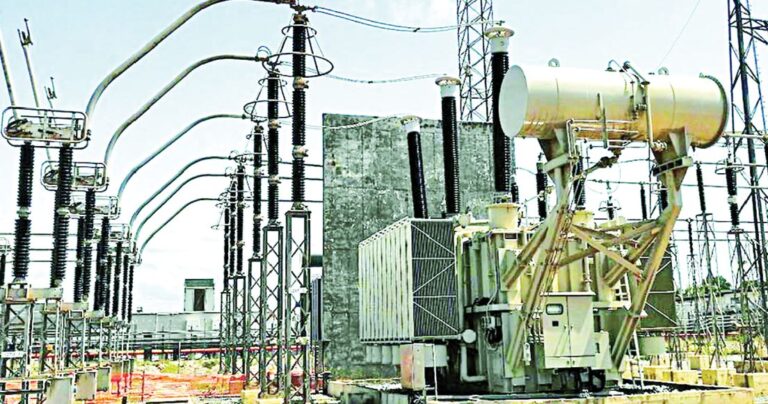
Meanwhile, the General Manager, Engineering, Transmission Company of Nigeria, Mojeed Akintola, said inadequate electricity generation remained a major constraint to transmission, noting that the company could only transmit the power produced by generating stations. He said TCN was expanding its capacity through new transformers and transmission lines but identified right-of-way disputes and vandalism as major obstacles to project completion.
—By Damilola Aina